Afterglow
Nine modules on one canvas.
Delay, reverb, tube saturation, ensemble, EQ, width and limiting — wired in series, each one switchable, all on a single patch surface. No menus, no pages.
- Format
- CLAP · VST3
- Modules
- 9
- Latency
- 1.4 ms
- Price
- Free

Lightforged Audio builds a small family of instruments and effects for people who would rather turn a knob than open a menu.
Live — turn a knob, watch the tape.
Nine modules on one canvas.
Delay, reverb, tube saturation, ensemble, EQ, width and limiting — wired in series, each one switchable, all on a single patch surface. No menus, no pages.
A Python editor in your DAW.
Write a compose function, press Ctrl+Enter, and the plugin publishes the MIDI it returns. Scales, chords, progressions and humanising come built in.
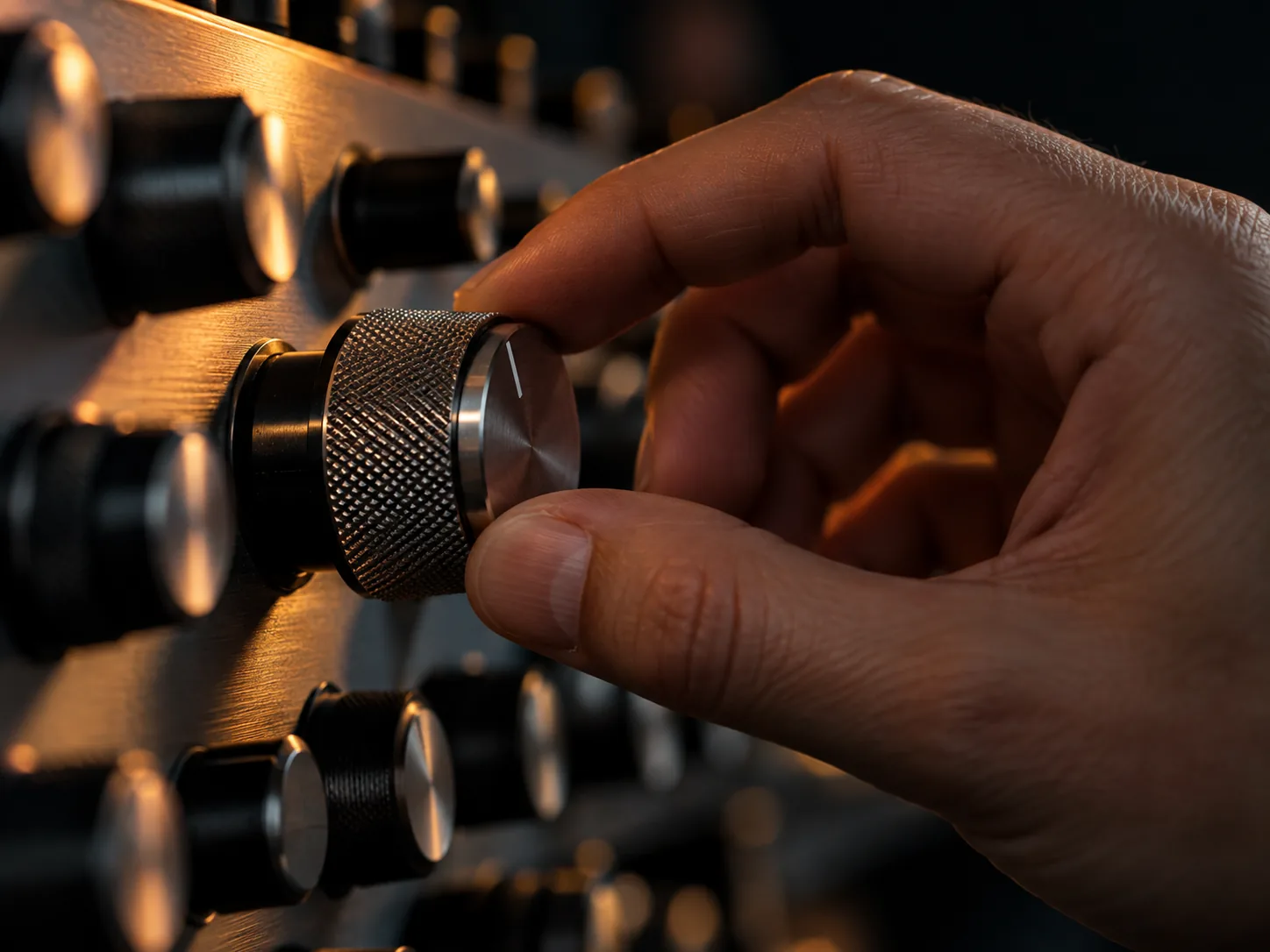
Every control is a knob or a switch you can reach for without reading. Depth tells you what is touchable: lifted faces you press, recessed wells that receive.
Afterglow needs no account and no connection. Nothing phones home, nothing expires, nothing checks a server before it makes sound.
No tabs, no wizards, no second window. Everything a plugin does fits on the surface you opened.
Lightforged Audio is built on an automated floor — AI agents do the work, and a human stands at the gate where it counts. That is why every plugin can hold one design language this tightly, and why the panels you see here are the components the products ship, not screenshots of them.